
This page is designed to present feedback from aviation professionals. We’ll condense then publish the key feedback, thoughts and stories from like minded professionals.

“The Office” – a day in the life of a big jet pilot. Sunrise over the pond (Pacific) (Courtesy Richard de Crespigny)
Story # 2 – The Little Prince

Lieutenant-colonel Hervé de Saint-Exupéry of the French Air Force just after a flight in a French Rafale
Editor: The letter below is from Lieutenant-colonel Hervé de Saint-Exupéry. Please also note that:
- The Little Prince is a French (and one of the world’s best-selling) book first published in 1943 by aviator Antoine de Saint-Exupéry. Lieutenant-colonel Hervé de Saint-Exupéry is Antoine’s great great nephew.
- Click here to see the email from Lieutenant-colonel Hervé de Saint-Exupéry
- Click here to view Richard’s reply to Hervé
Quotes – Leadership
- One must command from each what each can perform (p 31)
Quotes – Personality
- It is much harder to judge yourself than to judge others (p 32)
Quotes – Knowledge
- The only things you learn are the things you tame (p 60)
- People haven’t the time to learn anything. They buy things ready-made in stores. (p 60)
Quotes – Commitment & Love
- If you want a friend, tame me (p 60)
- It’s the time you spend on your rose that makes your rose so important (p 64)
- You become responsible for what you’ve tamed. (p 64)
Quotes – Perception & Love
- One sees clearly only with the heart. Anything essential is invisible to the eyes (p 63)\
- The stars are beautiful because of a flower – don’t you see .. (p 68)
- Whether it’s a house or the stars of the desert, what makes them beautiful is invisible (p 68)
Quotes – Expert, Perfection
- Perfection is achieved, not when there is nothing more to add, but when there is nothing left to take away
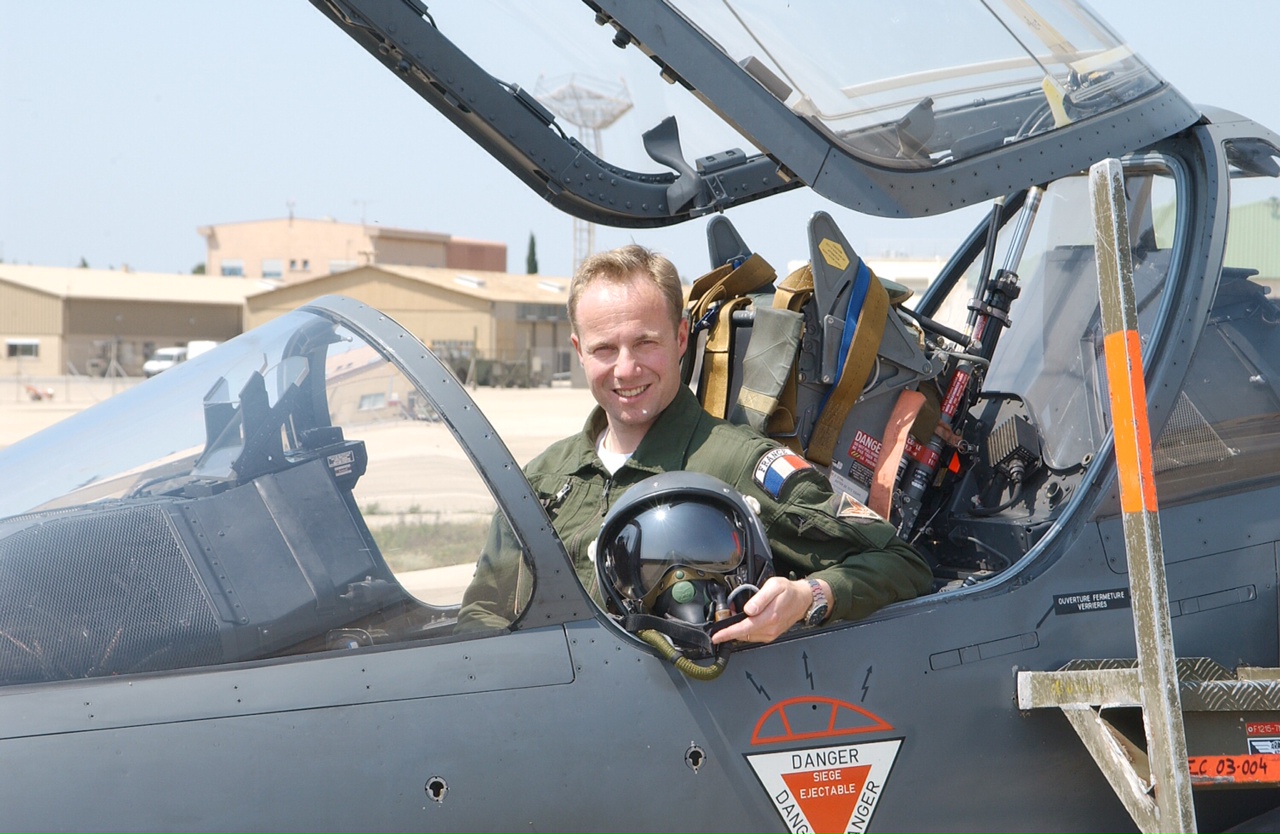
Lieutenant-colonel Hervé de Saint-Exupéry
of the French Air Force in his Mirage 2000
Dear Captain de Crespigny,
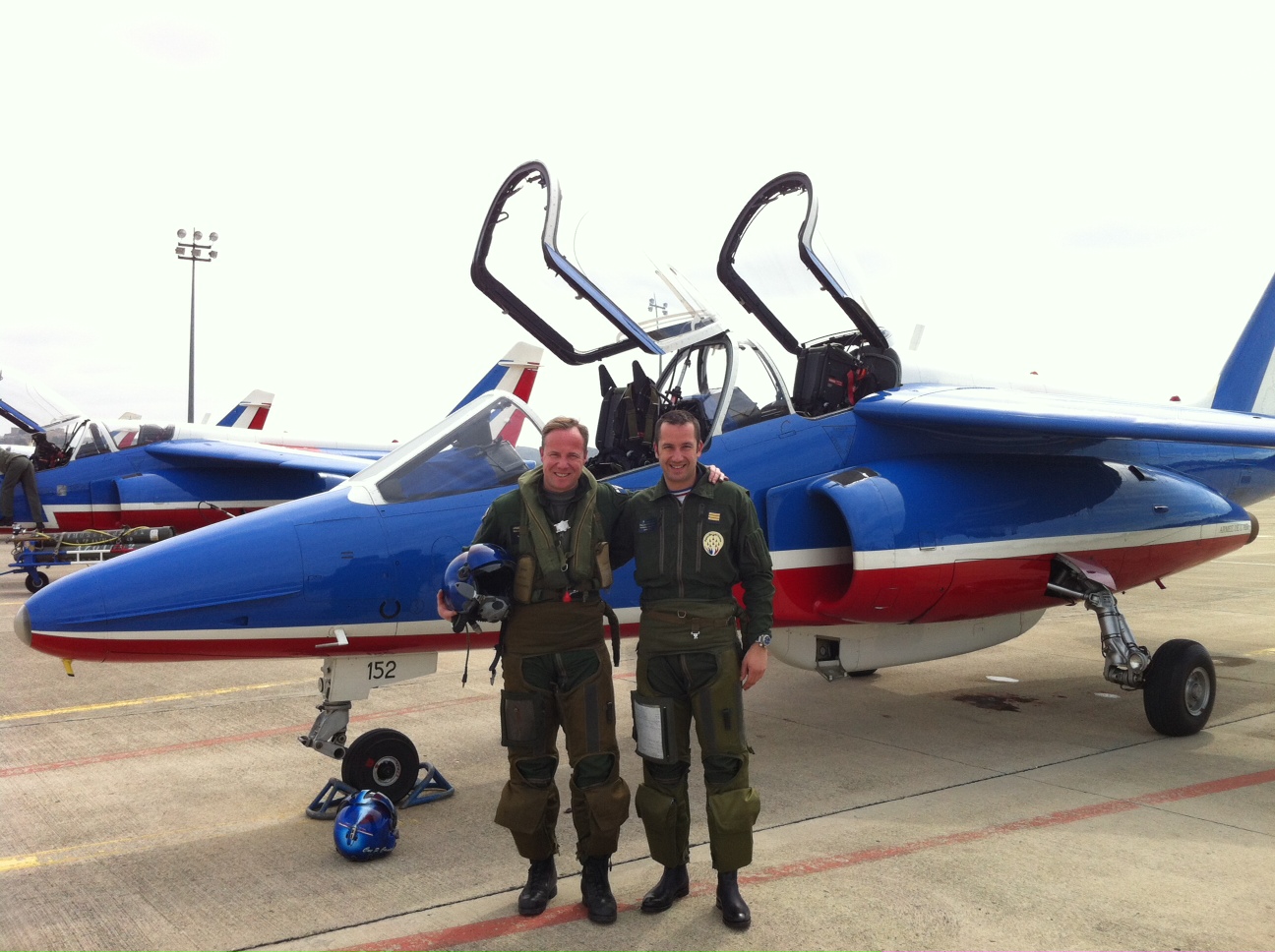
Lieutenant-colonel Hervé de Saint-Exupéry
of the French Air Force after a flight with the French “Patrouille de France”
I’m very proud to have received an answer from you. What a wonderful picture with your dad flying a spitfire ! What a marvellous example for these young people ! Congratulations !
I dedicate my photos to all young people of the world who want to become pilots or who want to realize their dream jobs.
As a pilot, we have the big honor and even the obligation to lead and mentor others in their chosen careers – to improve their work, perseverance, wisdom and hope! And then, they will be able to accomplish their dreams.
Do you know how I could read your book QF32 ? I read it thanks to one of my friend, who is a A380 Captain for Air France. He asked me to keep his QF32 in my attaché case during a visiting of Orléans Air Force Base. The place where our A400M aircraft is based. And naturally, at the end of the visiting, I forgot to give him back his book. Arriving back at home, I decided to start the reading of that book in order to improve my english.
So, I read your book QF32 totally by chance! And in the process discovered a magnificent story of a real event that I had nearly never heard of! And then, I wrote to you…
I wish the best to you, to your wife, to your dad and to your family. If you fly to Paris with your A380, I’ll be really pleased to meet you.
Saint-Ex.
Story # 1 -Engine Failure!
…. [QF32] taught me to seek out and to use everything I can learn about aviation, and enforced my point of view that no matter how small the plane is, checklists and teamwork are the best tools anyone can have. (Santiago de Larminat)
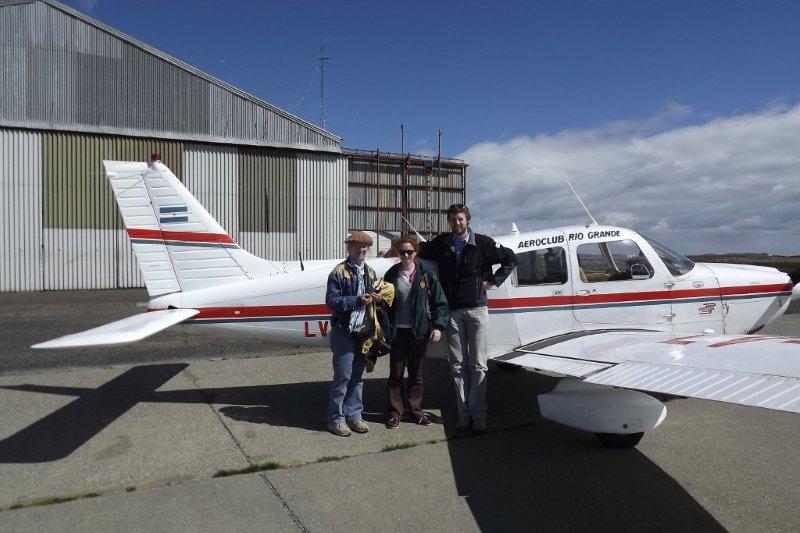
(Courtesy Santiago de Larminat)
My name is Santiago de Larminat and I am a medevac pilot from Argentina flying a Metroliner. Eversince I noticed that QF32 was out I wanted to get my hands on it.
Luckily my sister Ines spent 3 months in Australia, between NSW and Queensland, working in farms and doing some diving in the corals. When she returned, she brought with her QF32 for me as a gift.
thank you very much again for writing QF32 with its lessons about leadership and motivation
I cannot thank her enough! It was a wonderful read, full of details we pilots like so much. I was particularly impressed about the Caribou, I am very fond of the bush piloting techniques, and i am sure you had a very enjoyable spell flying those airplanes.
The real matter for why I’m writing is because the next day I finished your book, I was on duty flying from my base at Rio Grande (SAWE) to Aeroparque (SABE) – Buenos Aires -, and back. On the return leg we had to perform an in-flight engine shutdown due to a faulty FCU (best guess). I have had a couple of engine failures before in my 1,000 hr career, but this one was special because there were no suitable airports for several miles and we were well off-shore. If you have ever flown the QF18 route you’d notice there aren’t many suitable airports along the Patagonian coast line. Well, the same applies to a Metro, airports are separated in a 100nm radius. Uh oh. [Ed: Rich understands Santiago, he flew Jumbos from Auckland (New Zealand) to Buenos Aires (Argentina). The minimum air distance route often had the jet following the Antarctic coastline, up to 2,500 nautical miles (five hours flying time) from the nearest emergency airfield!]

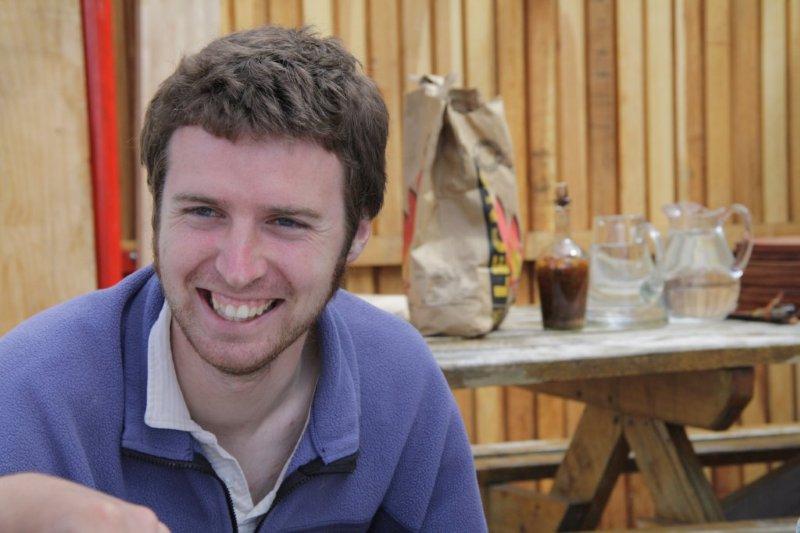
(Courtesy Santiago de Larminat)
Compounding our problems, there were strong 40kt headwinds blowing us further out to sea and away from South America. Long story short, we ended up landing without anymore setbacks at Rio Grande with altitude to spare, although we had flown with an engine out for 54 minutes.
It was very important for me to have read and finished your book by that flight. It certainly helped me and the rest of our crew during that time. We kept our composure and used all the management and CRM principles: everybody voiced their concerns, gratifications, opinions and corrections – we were 8 on board and 3 of us dealing with the emergency.
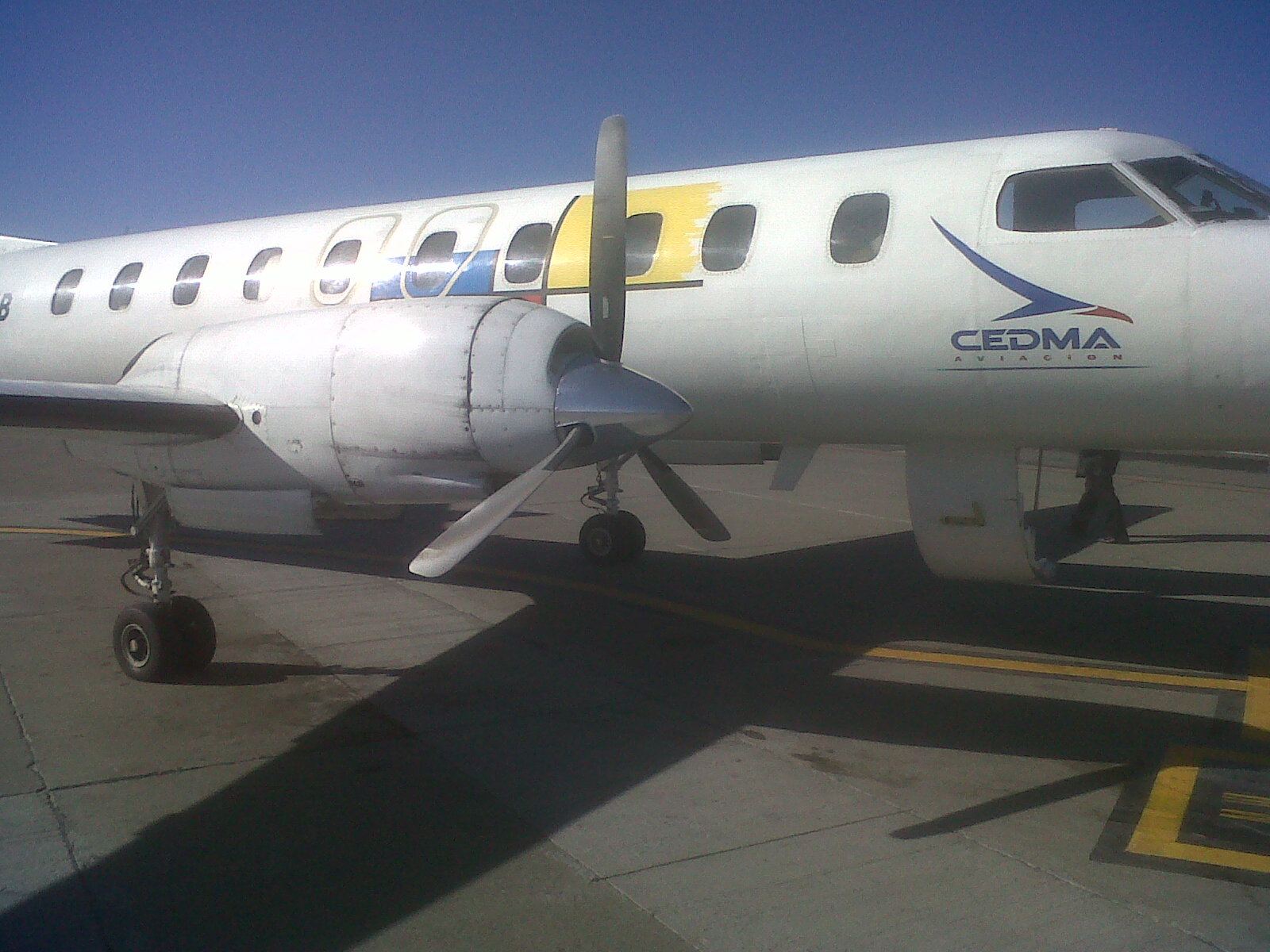
After the flight… (Courtesy Santiago de Larminat)
As I explained, QF32 gave me great inspiration to be a better pilot. It taught me to seek out and to use everything I can learn about aviation, and enforced my point of view that no matter how small the plane is, checklists and teamwork are the best tools anyone can have.
Well, that’s my significant story that I felt compelled to tell you. I cannot stress enough – thank you very much again for writing QF32 with its lessons about leadership and motivation.
Yours sincerely,
Santiago de Larminat
Medevac pilot
Argentina
PS: I can’can’t wait for Big Jets!!!!
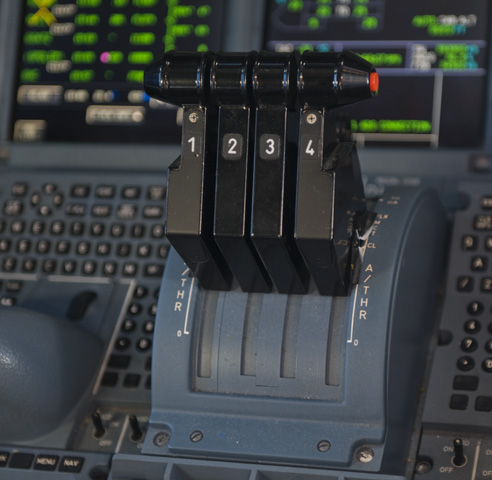
A380 Thrust Levers (Courtesy Richard de Crepsigny)

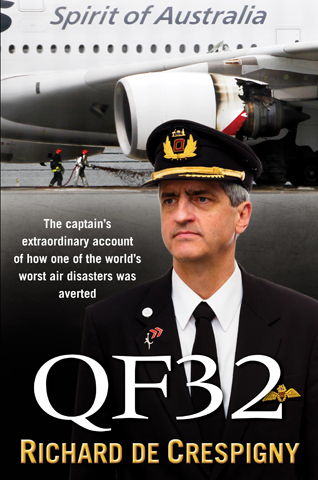


 QF32
QF32 
Hi Richard,
I’m a first officer, reading your books I understood the importance of communication with passengers. You talked a lot the way you communicated that day. On normal days instead which are your tips to communicate properly with them? Which info do you suggest passing to passengers on a normal welcome PA? I see many people tend to make it very long and from a pax perspective this might also be disturbing…
All the best
Hi Ricardo,
There is no simple answer to your question.
The content of the PA you deliver depends on your personality. If you are not comfortable making PAs then keep the PA short and mention just the essential items.
If you are confident making a PA, then talk to your passengers as though they are members of your family. Speak to them softly, politely. Give them the information they must know. Give them other information if it is relevant for the aircraft and/or flight.
Be aware that up to 20% of passengers have a fear of flight. So, if you have a chance to arm their minds with unusual things that will occur, then do so. I always told passengers if the take-off or arrival will be rough, so that the passengers expect it and therefore do not panic. If it’s really rough, I distract passengers by telling them about the Dance of the Ailerons on the A380 and that suggestions this is the best time to view it.
If you make the PA loud enough, personal and interesting, then the passengers (your family) will listen and enjoy it.
As a general rule, when things are going well, keep the passengers informed. When things are going bad, tell them everything.
Hi Richard,
Your huge experience could really give me some amazing hints.
Currently I started on A320, my first jet. I love energy management and dealing with descent planning. First of all, which rule would you suggest as 3x table for someone is 3x distance, for others is 3x Altitude. Not big difference, just a 10%, but marked especially at distance, obviously.
Regarding deceleration, how many miles do you suggest to add? There are again different opinions around, from + 10, + 5, 1nm each 10 knots down to Green Dot or others to “S” speed.
I see biggest problems are when ATC asks for a slow speed from a big distance/altitude. If I keep 250 to say 20nm/5000ft, then start decelerating to Green Dot, there is no problem but If I have to reduce speed at Green Dot at say 30nm, even with good margins, the gradient is so shallow that sooner or later I need early Flap1 (to get rid of VLS) and speedbrakes.
When I expect those conditions, how much margin should I add?
Best regards
WARNING – TECHNICAL FOR NON PILOTS
Hi Ricardo,
Thanks for posing your Qs for the A320. There are many ways to tackle the speed/altitude/slowdown issues, and I am sure your instructors will help if you ask. My quick thoughts are:
Have gates.
Say 10,000′ at 40nm at high speed (slowing). If you reach that, then the rest of the descent will be fine.
250 kts at 5,000′
Your gates will be different closer in because of the A320’s slower approach speeds.
The A380 slows at about 1 knot per second. So, to slow from 330 to 250 kts level uses 80 seconds @ an average of 290 kts. My quick arithmetic says 300 kts = 5nm/min. So, 80 secs = 1 1/3 times 5 = 7nm (to slow in level flight)….. (this is all done mentally)
I grab hold of the glideslope whenever possible below 10,000′. If you lock onto the GS, then the only other variable to consider is speed. So, play with thrust, speedbrake, landing gear and flaps to slow the acft on the GS as you approach. This method is accurate and fun.
Note: I ALWAYS tune an aid (ILS DME/DME/FMC distance) to show the distance to the threshold/airport. I then do a 4:1 (fast) and 3:1 (slow below 10,000′) divide along the descent to roughly cross check height vs distance. I also make a -/+ 3nm correction per 10 knots of average head/tail wind.
Your descent accuracy will increase with experience. When you can do the fast maths in your mind, then the stress reduces!
Non pilots reading this answer might think “just trust your computer profiles!” and that these calculations are redundant today. My answer to these trusting observers is to have a chronic unease for computer calculations and always do reasonableness checks to confirm the computers are correct. In the same manner that most spreadsheets have incorrect formulae, I have seen many times the FMC computers give wrong heights because of some error in the setup or data.
Also, when things go wrong, you might have to descend and approach without any FMC data. In some cases, while the FO was busy running complex (abnormal) checklists, all I needed to know when to start and to monitor the descent was one VOR-DME. In those complex situations, we always had our descent under control (with a corresponding low stress!).
Best wishes for safe and fun flying!
Rich
Hi Richard, I have just seen on Linkedin that you retired a few hours ago. Is it true ? If yes, congrat for your magnificent career Sir ! Pround to be linked with you. The best to you in your next career.
Hervé de Saint Exupéry, Air France pilot, Former french air force fighter pilot.
PS : Just a short story for you. In 2015, I was asked to present a national french air force youth program, that I created with my team, to the executive comitee on the FAF. The FAF chief of staff and his whole team were there. Do you know how I started my presentation ?
Answer : I spent 5 min out of 30 to speak about the QF32 adventure in my introduction. My goal was to lead the attention of all the 12 most ranked generals of the FAF seated in the room on a beautifull story dealing with Leadership and humanity. As I said to them in the end : “Instead of telling me what goes wrong in our cockipt, tell me what works !” They all were very surprised by my introduction. Never any basic Ltc of the french air force had the opportunity to tell such a story to so many high ranked generals. At the end of the presentation, I was said that I made it perfectly and with a marvellous aeronautical spirit. Today, I do not work anylonger for the FAF. But the national youth program that we created does still exist. It is growing again and again because our french society needs it.
To cut a long story short, you and your team of the QF32 brought me a enormous power of persuasion the day I had to present our youth program in order it to be validated by the FAF Chief of staff. Thank you Richard ! Aviation leads to the most beautiful stories at one condition : there must be built on human values….
Best regards
SAINT EX.
G’day Captain Richard,
I happen to be due for an airline assessment soon and it may be in an Airbus simulator. I have only flown aircraft with a conventional control column up until now. Any tips for the side stick? How did you find the transition to the side stick after so many years on the 747?
Cheers!
Albert
Hi Albert,
I have nothing additional to say over the pages of text that I wrote at QF32 page 119. There is a long description there.
Best
Rich
Hi Capitan Richard,
Just wondering if Matt has gone on to be an A380 Capitan. In my opinion he is definitely worthy.
Kai
Kai Matt is now a first officer on the 737. You are right – he is definitely worthy of being a Captain.
Dear Capt Richard,
I wish to clarify a doubt.
The A320 FCOM states that in normal cruise around Mach.77 in straight flight with AP engaged and fuel in the wing tanks distributed symmetrically the rudder trim should stay between 1 degree Right and 2.3 degree Left. I wish to know why it is different for Left and Right? Thanks.
What a fascinating question Sabu! Perhaps:
Rich
Thanks Capt.Richard. Both the engines rotate clockwise when viewed from the rear.
Dear Captain Richard de Crespigny,
I’m a french fighter pilot. Two days ago, the French Air Force lost 9 aviators in Spain during a Tactical Leadership Program. And, I finished reading QF32 the same day.
Aviation can be dreadful. But it is also the most marvellous human activity because it is simply a service offered to mankind. Transporting goods or people, presents or letters, hope or sadness, everywhere around the planet – Aviation is like a miracle even if it can be a tragedy.
Your story is full of emotion. Your are lucky to have lived it and to go on with telling it again, 5 years later. Telling such a story brings pride.
Aviation is also a question of feedback. It is a matter of team building. The Technical aspects are important to enable an aircraft to get airborne. But Human Factors are far more precious to achieve a successful mission. Your story expresses this secret so well. That is the reason why your story is a universal story. All that you explain in your book can be used by workers, bosses and leaders of all sorts at any levels in any industries. Congratulation Sir !
In your words, we can see something coming from the philosophy of my great great uncle Antoine de Saint-Exupéry. As the fox says to the Little Prince: “The most important things cannot be seen with the eyes but with the heart”. That’s exactly what you did on 4 november 2010. All your experiences as a pilot reappeared through your heart and through the hearts of every person in your team. You all were successful to “check your six”! Congratulation to all of you, Sir!

You and your teams are heroes. We must speak about real heroes who tell humbly how they lived to people, to young people and to the world. We need such stories to set and to reach our goals, to keep our dreams alive. In your book, the key hero is probably your father. Let us remember why and how he permitted you to join the Australian Air Force. A quick visit of an Air Force Base deserves far more than some hundreds of dollars as a compensation. All military pilots know very well what types of secrets an Air Force training can bring, for the pilot’s whole life. Sometimes, exposing these secrets help us to prevent losing hundreds of lives located in a lost airplane. Congratulation to your father, Sir!
Once again, let us all have a special thought for our 9 friends lost last Thursday in Spain, and for those who were badly injured, and for their suffering families and friends.
Aviation can be cruel. But aviation can also be our proudest example and proof of human prosperity and evolution. You revealed it!
Thank you, Sir.
Yours sincerely.
Lieutenant-colonel Hervé de Saint-Exupéry
French Air Force
Written in Paris, on 29 january 2015.
Editor: Please read “Story # 2 – The Little Prince” located at the top of this page.
Dear Lieutenant-colonel Hervé de Saint-Exupéry,
Thank you for your heartfelt letter. You have pulled my emotional strings with your words of pride and camaraderie for your colleagues, the military, the aviation industry, aviators and my Father.
I am so very sorry for your and France’s tragic loss of the nine aviators in Spain last week. I share your pain. I wrote in my book of the sorrow that I felt when my friends were lost in the Air Force. The only positive legacy to rise from their passing is that they (like other explorers, adventurers, test pilots and astronauts) will be honoured for helping to develop, mould and shape aviation into the most remarkably efficient and resilient industry that we enjoy today.
Neil Armstrong often said: “It’s easy to see further when you are standing on the shoulders of giants”. We will never forget your lost friends.
I am pleased that you enjoyed reading QF32. My next book will continue to reflect my deep passion and respect that I feel for my profession, its ancestors and the current professionals who strive to keep flying save for the billions of the travelling public. I would like to borrow the wisdom from your great great uncle Antoine de Saint-Exupéry in his quote from 1933: “The machine does not isolate man from the great problems of nature but plunges him more deeply into them.”
I am touched that you cut through the 360 pages of text in my book to identify Peter de Crespigny, my father as the true hero. You are absolutely correct. It is the most honourable person who commits to a life in aviation, and then when their career is delayed, sidesteps to mentor others to help them negotiate their aviation careers. I will always love and respect my Father for his help and guidance. I proudly include images here of Dad flying a Spitfire from Goodwood aerodrome in 2013.

Your words are correct: “Aviation is a miracle even if it can be a tragedy” It is the rare breed of people in aviation that I research or who I meet that make me feel proud and who spur me to continue writing. These bands of brothers and sisters have paved the way for us to enjoy aviation today.
You are part of this hallowed tribe. So “bravo” to you sir!

Save flying Hervé de Saint-Exupéry. I wish you and your colleagues in the French Air Force the best of health, flying and wonderful careers. We will remember your lost colleagues in Spain last week.
Richard de Crespigny
Editor 1: Please read “Story # 2 – The Little Prince” located at the top of this page.
Editor 2: Painting above courtesy of Jaak De Koninck
Richard,
I read your inspirational book ‘QF32’ with amazement and awe, a demonstration of absolutely superb airmanship. Your comments about building the plane from the ground up, like a Cessna, resonated with me as someone who has just started learning to fly, in a Cessna!
A quick question if I may. What flap setting did you utilise for the landing, and how did you get any flap response at all from the damaged left wing? Were the hydraulics to the flaps, esp on the left wing, still intact?
With thanks.
Hi Julian,
We landed using the Flaps only in CONFIGuration 3 (26 degree flaps and 5 degree aileron droop on half the ailerons and 0/23 degree slats). The leading edge slats were locked out due to mechanical damage. The FLAPS were powered by the Yellow hydraulics system powered by engines 3 & 4.